
Investor shifts and project viability pressures could stall new housing delivery
Australia’s housing pipeline is facing growing pressure, with changes in investor behaviour and tightening project-viability thresholds…
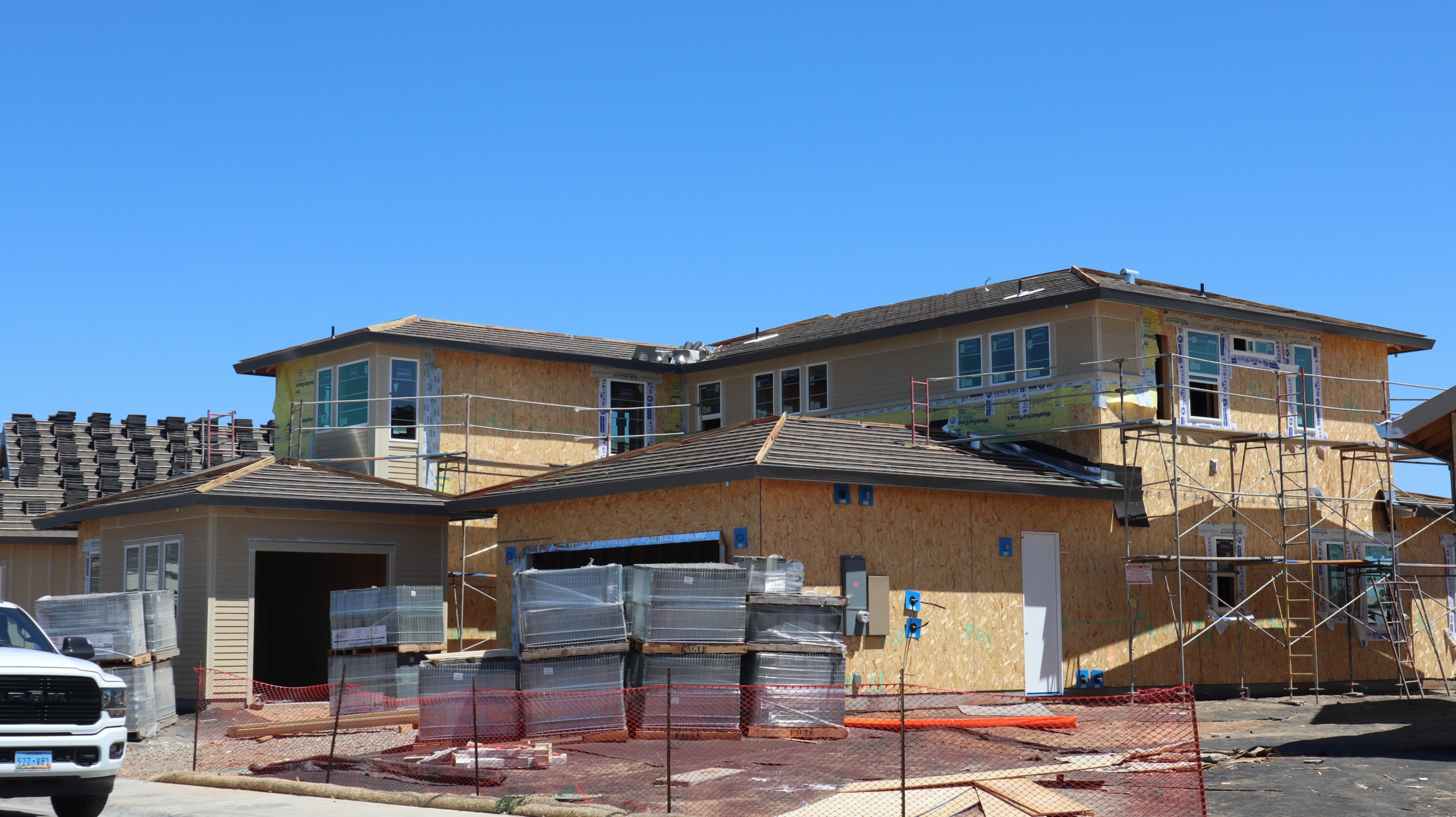
Photo by D Goug
Australia’s housing pipeline is facing growing pressure, with changes in investor behaviour and tightening project-viability thresholds threatening to delay or derail new housing supply at the exact moment the nation is struggling to meet its Housing Accord targets.
Access Wealth Managing Director and Founder Dory Senior said the new-property market is becoming more nuanced, and that the gap between approvals and actual delivery is widening despite relatively positive headline numbers.
According to the National Housing Supply and Affordability Council, quarterly approvals are now 26 per cent higher and commencements 15 per cent higher than immediately before the Housing Accord period. Despite that, only around 308,000 homes have been completed in the first seven quarters of the Accord’s five-year timeframe.
A record 244,000 dwellings were under construction in the March quarter — still not enough to meet demand, Mr Senior said. He warned that risks emerging in the pre-sales and construction-finance environment are not yet fully appreciated outside the industry.
“Building approvals are obviously important, and I’d much rather see them rising than falling,” Mr Senior said. “But an approval isn’t a completed home. The real issue is how many approved projects are commercially viable, obtain finance, achieve the required pre-sales, commence construction and ultimately become homes people can actually live in.”
Mr Senior said any reduction in investor participation at the pre-sales stage risks compounding that shortfall, with some projects facing delays, reworking or abandonment if they cannot achieve the sales required to proceed.
“Some projects will inevitably be delayed, reworked or abandoned if they can’t achieve the sales required to get out of the ground,” he said. “If Australia desperately needs more housing, anything that weakens the delivery pipeline becomes a serious concern.”
He said several recent policy settings have created different incentives for residential and commercial property, with signs already emerging that some investors are reconsidering where they allocate capital.
“We’re seeing increased interest in commercial property from some clients,” he said. “We shouldn’t assume every investor who steps back from established residential property will redirect their money into a new house or apartment. Some of that capital may leave residential property altogether.”
Mr Senior said this shift is occurring as investors become more sophisticated in separating short-term noise from long-term fundamentals. He pointed to Melbourne as a clear example of why context matters — while headlines have focused on recent underperformance, the city’s population continues to grow strongly.
Greater Melbourne added around 105,000 people last year, more than any other Australian capital, with outer-growth corridors such as Mickleham-Yuroke growing by roughly 12 per cent in just 12 months.
Mr Senior cited a client’s recent purchase in Mickleham to illustrate how data-driven decision-making can outperform sentiment-driven hesitation.
“We actually have a great example of this with one of our clients,” he said. “They purchased a townhouse in Mickleham last year, which was a smaller block, townhouse product, plus a reverse floorplan with the living area upstairs, that is pretty much the holy trinity of things an emotionally driven investor might object to. Twelve months later, though, bank valuations came back between $739,000 and $752,000, which was an equity uplift of more than $150,000.”
Mr Senior said the example reflects a broader structural shift in the type of housing Australians will occupy over coming decades.
“The big, detached house on the large block will always have appeal, but affordability, demographics and the way our cities are developing mean smaller lots, townhouses, terraces and higher-density housing are becoming a much bigger part of the market,” he said. “Investors who adapt to how Australians are actually going to live over the next 10 or 20 years will have an advantage over those still trying to buy using a perspective that’s 20 years outdated.”
He said the ability to separate sentiment from fundamentals is becoming a defining advantage, drawing on the experience of the early pandemic period as a cautionary example.
“COVID gave everyone a pretty good lesson in why that’s important,” he said. “In early 2020, modelling predicted price falls of 20 to 30 per cent but national home values ultimately fell by only around two per cent before rebounding strongly. It’s just as important not to buy into negativity today as it is not to buy into hype when the market is booming.”
With population growth continuing to outpace completions, Mr Senior said the fundamental challenge facing the housing market remains unchanged.
“Despite all the noise, the fundamental problem hasn’t changed — our population continues to grow and we’re still not completing enough homes,” he said. “Anything that weakens project viability or slows delivery risks making that problem worse.”